
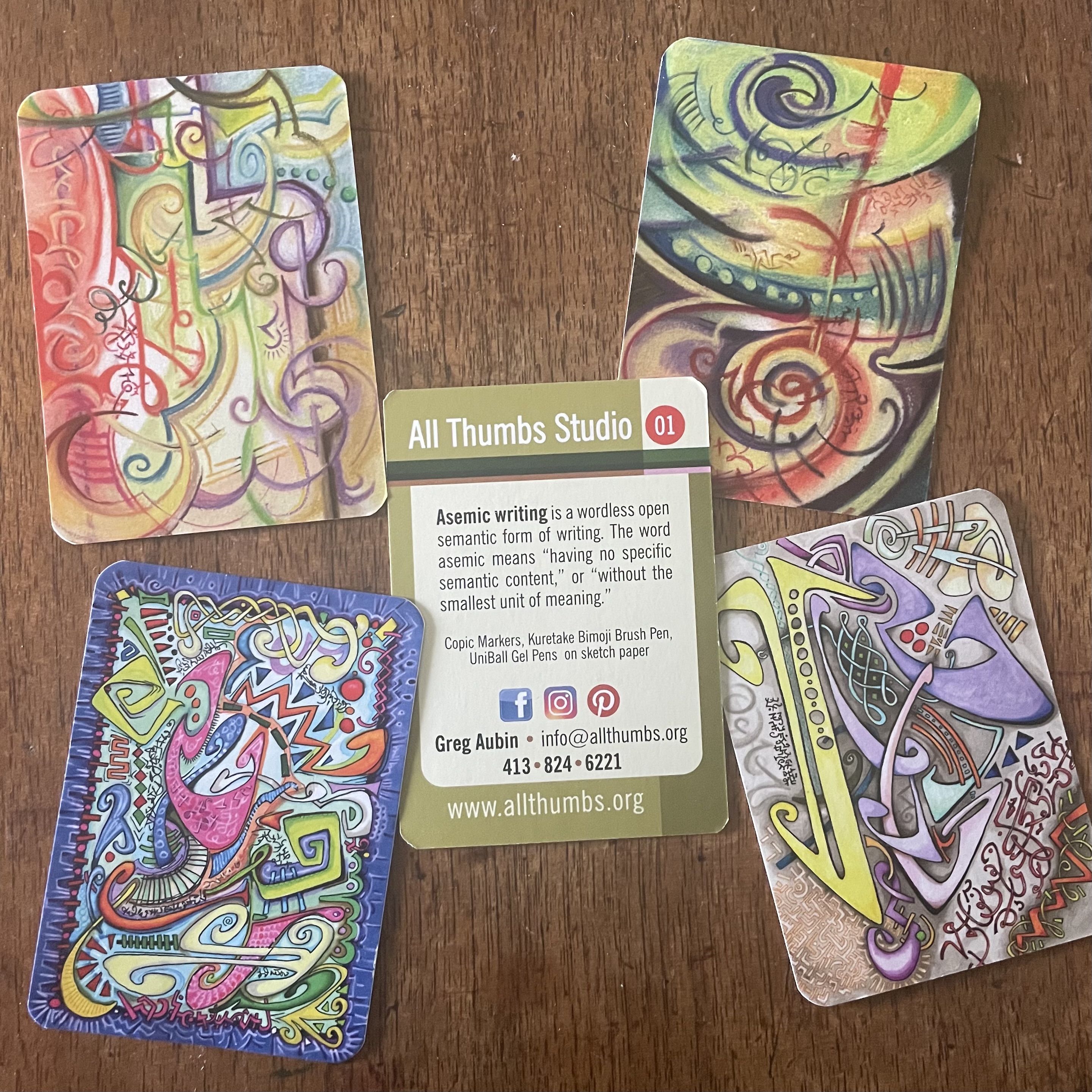
In my opinion, we artists should all do trading cards instead of business cards. I’m a collector by temperament and I think there is a large group of us (and our customers) that are in the same category. I believe that having a trading card size business card allows people visiting our booths to start a collection of small artwork of the artists they like. And. It allows us artists to collect other artists cards as well.
Why did I started doing trading cards?
I found in comic book shops in the ‘80s and ‘90s small boxed trading cards that were on the shelves that were not sports related. A company called Kitchen Sink Press published some great titles like “Rotton to the Core” – a New York City themed collection of corrupt people infamous in the city. The Donald Trump card is very valuable today. Another notable person in this collection was Rudy Guiliani. I started collecting these boxes especially as they started to end up in reduced bins. There were R. Crumb drawings on Country and Blues musicians; Rise and Fall of the Soviet Union; etc.
Kitchen Sink Press—founded in 1970 by Denis Kitchen as a pioneering underground comic and alternative book publisher—produced a distinct line of non-sport and pop-culture trading card sets housed in full-color, two-piece boxes during the late 1980s and 1990s before the company closed in 1999.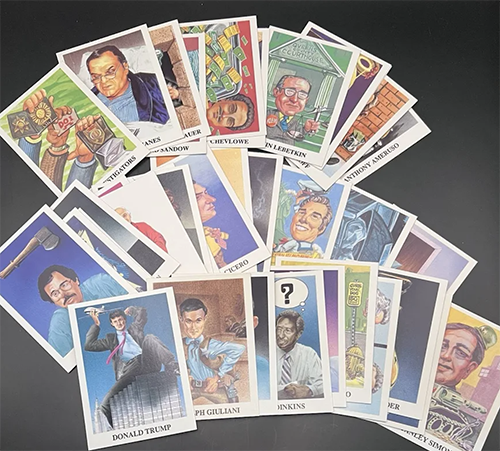
For many years my goal has been to create my own collection of my work designed to fit into this format – 36 total cards. I have currently printed #1-4 and have #7 on order (#5 & #6 are black & white cards that need to be completed.)
I included small snippet of information regarding influences and definitions that I feel are relevant to my style.
I find these are well received and I feel they are more memorable and collectible than the typical business card. Trading Cards are 2.5” x 3.5” and I have them made 4c both sides with a gloss coat on both sides. I like to have the corners rounded as well.
I think of my cards as a more commercial version of the Artis Trading Card movement:
Artist Trading Cards (ATCs) & ACEOs
-
- Size: Strictly 2.5" x 3.5"—the exact same dimensions as standard baseball or playing cards.
- ATCs (Artist Trading Cards): Miniature, self-made or small-series original art pieces created to be traded for free with other artists at in-person or online swap events. Initiated by Swiss artist M. Vänçi Stirnemann in 1997.
- ACEOs (Art Cards, Editions and Originals): Same 2.5" x 3.5" miniature format, but created specifically for sale and collection rather than trading.
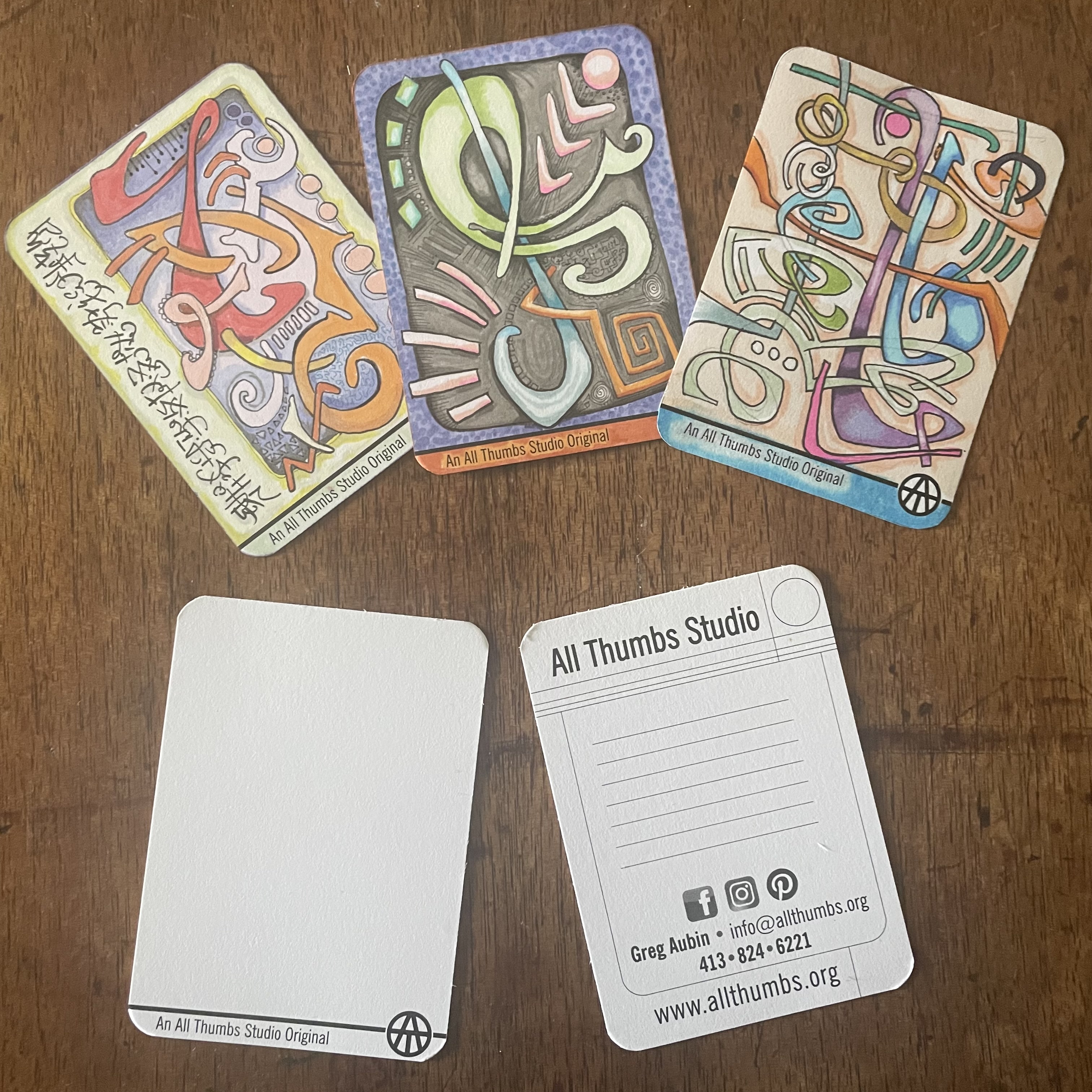 I had a set of cards printed on card stock with only one side printed with my standard back side data. This allows me to draw original one off cards and trade with other original Art Cards.
I cannot end this post without including Mail Art – which I see a precurcor to the Art Cards:
Mail art (also called postal art or correspondence art) is a global artistic movement in which small-scale creative works are sent through the postal service rather than shown through traditional galleries or museums.
Key Characteristics
-
- Non-Commercial: The movement operates outside the commercial art market, focusing on personal exchange, community, and relationships rather than monetary value.
- Open and Inclusive: Exhibitions are typically unjuried and open to anyone who wants to participate, regardless of formal art training.
- Diverse Media: Works can include postcards, hand-altered envelopes, collages, rubber stamps, artist-made postage stamps (artistamps), stickers, poems, or small found objects.
- Thematic Calls: Mail artists often issue open calls for specific themes, inviting contributors from around the world to mail in pieces for collective projects.
While I don’t really expect everyone to jump on these ideas, I would like all artists to consider the trading card size to be the new artist “business” card size. I mostly encourage this because I want to start trading with other artists.


